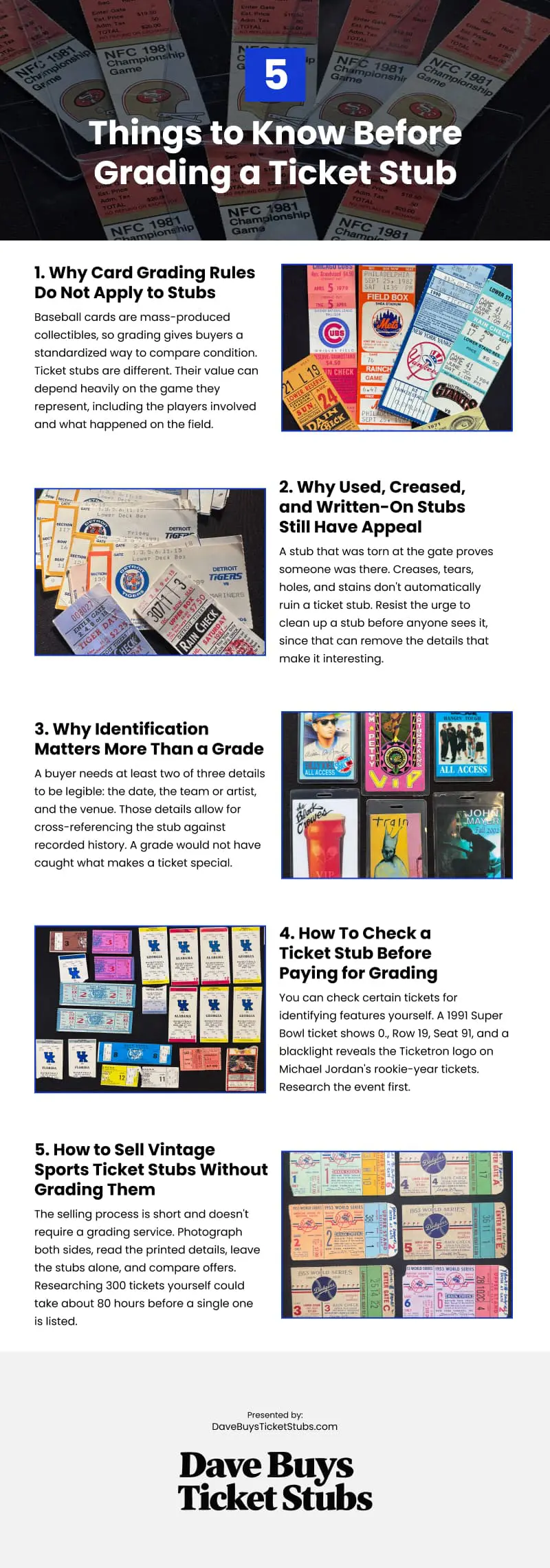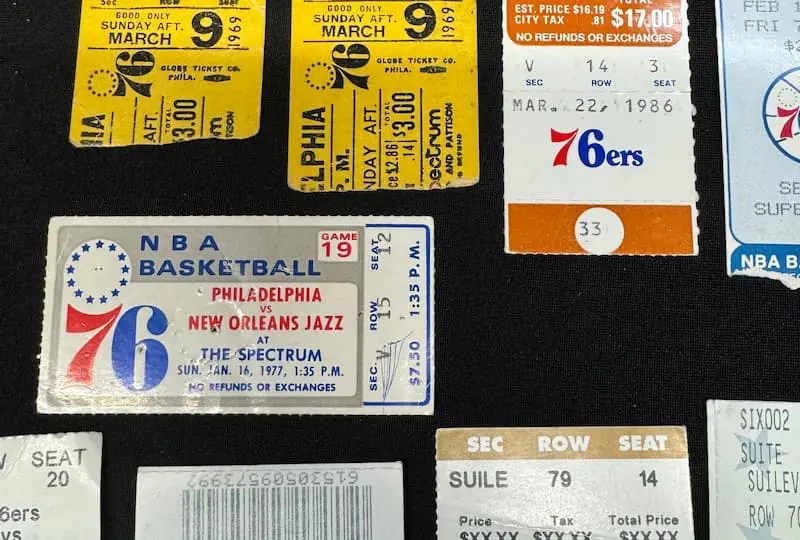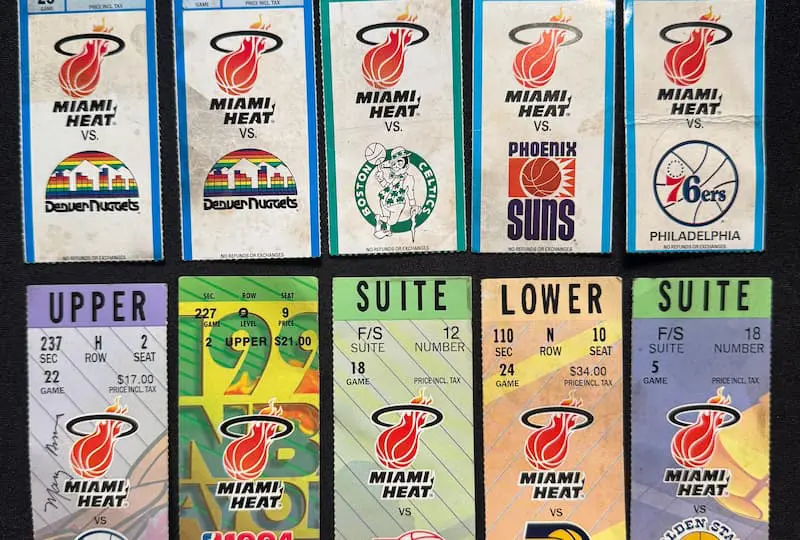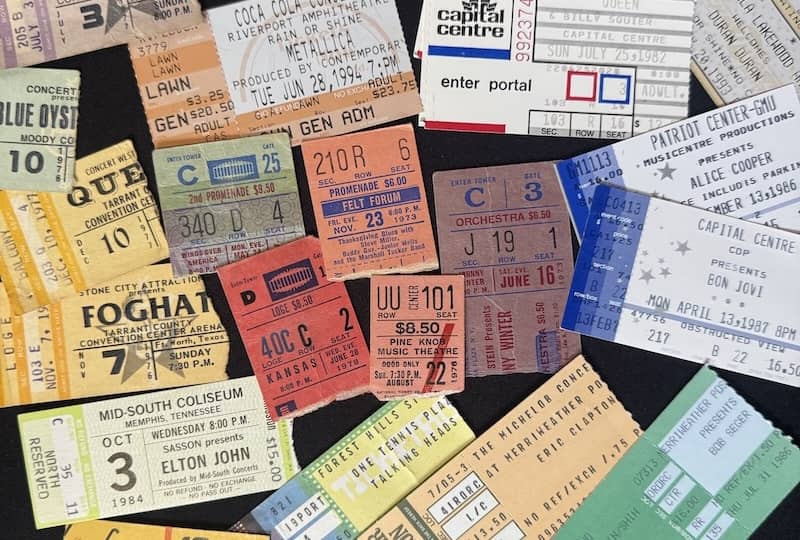
Sports card collectors know all about grading. A card goes to a third-party service, comes back in a sealed case with a number on it, and that number helps drive the price. If you’re selling ticket stubs for the first time, you may wonder if the pricing process is the same.
It’s not. Grading is generally not required. In fact, skipping it usually saves you time and money. Here’s what to do instead when you’re looking to sell vintage sports ticket stubs.

Why Card Grading Rules Do Not Apply to Stubs
Baseball cards are mass-produced collectibles, so grading gives buyers a standardized way to compare the condition of copies of the same card. A soft corner, crease, or surface flaw can affect the grade and, in turn, the price. Writing or other damage can also reduce a card’s appeal to collectors.
Ticket stubs are different in one important respect. Their value can depend heavily on the game they represent, including the players involved and what happened on the field. Condition can still count, but not always. A grade generally indicates paper and picture quality. It says nothing about what happened that night.
Why Used, Creased, and Written-On Stubs Still Have Appeal
A stub that was torn at the gate proves someone was there. Collectors typically like that proof. Unused tickets are rarer and usually cleaner, but that doesn’t usually translate into a higher demand the way it would with cards.
The same goes for wear. Creases, tears, holes, and stains don’t automatically ruin a ticket stub.
Even handwriting can help, especially when it adds context. For example, a note on the back that reads “Dad’s birthday, Cubs won in extra innings” tells a collector a real person attended that particular game. It also hands the researcher more evidence about the event in case there was something very special about that day.
Try to resist the urge to clean up a stub before anyone sees it. Erasing pencil marks, taping a tear, pressing out creases, or peeling a stub off a scrapbook page can remove the details that make it interesting. Leave each one as it is. While you sort, a plain envelope or folder that keeps the stubs dry and flat is usually good enough.
Why Identification Matters More Than a Grade
In this hobby, value comes from what happened at the event. To find out, a buyer needs at least two of three details to be legible: the date, the team or artist, and the venue. Those details allow for cross-referencing the stub against recorded history.
Take a stub from a Guns N’ Roses show at the Ritz in New York on October 23, 1987. It looks like any other concert ticket until you learn that that night was recorded for a live album. A stub from that show has attracted offers ranging from $20 to more than $800. That kind of difference shows why identifying a ticket stub’s history is so important.
More than likely, a grade would not have caught any of that. If you pay to grade a ticket to learn its condition before checking its history, you may miss the reason it might be special.
How To Check a Ticket Stub Before Paying for Grading
You can check certain tickets for identifying features yourself. Super Bowl commemorative tickets, for example, have a date pattern you can look for. A ticket for the 1991 Super Bowl, played on January 19, would show Section 01, Row 19 and Seat 91, representing the date 01/19/91.
Michael Jordan’s rookie-year tickets have another identifying feature. Shine a blacklight on the ticket, and the Ticketron logo appears in invisible ink.
These checks can help you assess a ticket before paying for professional grading or authentication. Research the event first to determine whether your ticket might be an unusual find.
Professional grading can make sense in exceptional cases, particularly when a ticket is tied to a landmark moment and its value is high enough that a buyer may want a third-party review. An unused ticket to Michael Jordan’s first NBA game, which sold for roughly half a million dollars, is one example. But a ticket at that level is far from typical.
How to Sell Vintage Sports Ticket Stubs Without Grading Them
When you sell vintage sports ticket stubs, the process is short, and none of it requires a grading service:
- Photograph both sides. Use good light, and keep any handwriting visible.
- Read the printed details. Find the date, the team or artist, and the venue, and note which ones are legible.
- Leave the stubs alone. No cleaning, taping, or flattening.
- Compare offers. Ask all interested buyers how they arrived at their offer number, and expect a clear answer.
If you try to research a collection of 300 tickets yourself, it could take about 80 hours before a single one is listed. Grading each one would add fees and waiting time on top of that.
Some stubs may never need to leave your hands. A ticket from a first date, a father-and-son trip, or the night before a big move carries a value no grade can measure. Keep those. For the rest, start by working out what exactly the ticket is and why that night might matter.
Infographic