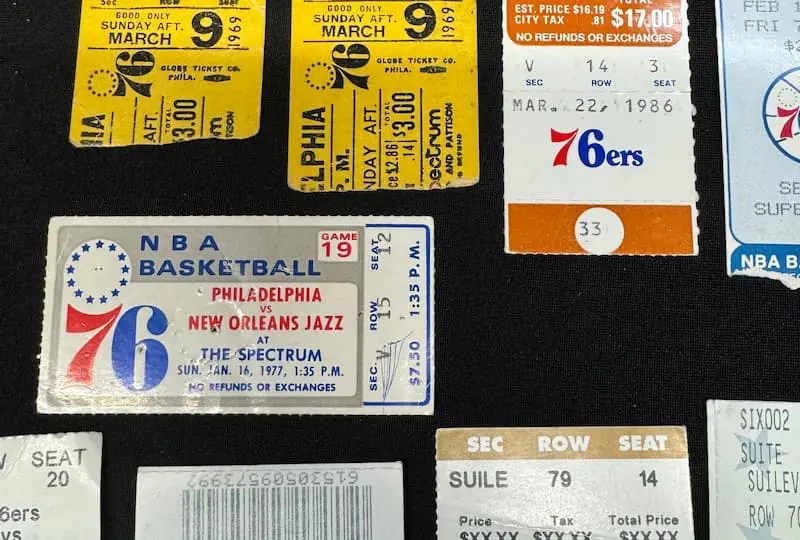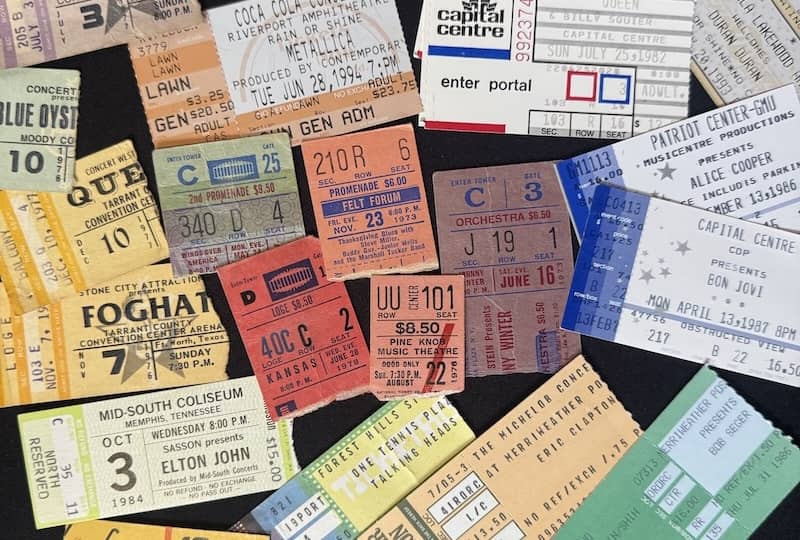
While helping your parents pack for a move to a smaller condo, you discover a shoebox full of your dad’s old ticket stubs. One reads “New York Giants,” and you picture a football game from decades ago. But that ticket could be from a baseball game. Both a baseball team and a football team once shared the New York Giants name. And if you’re wondering, “Are ticket stubs worth anything?” that answer may depend on which team played and the game’s historical significance.
The good news is there are usually clues, and we’re about to tell you what to look for. The date, opponent, ballpark, and other printed details can help you figure out the stub’s origins.
Two Different Teams with the Same Name
The baseball Giants played in New York until the end of the 1957 season, then moved to San Francisco. The football Giants started playing in 1925 and kept the New York name, even after they left the city for New Jersey in the 1970s.
There’s a long stretch of overlap between the two teams. From 1925 through 1957, both teams were active in New York at the same time, and a stub from those years could belong to either one.
The years on both ends of that stretch are easier. A stub from before 1925 can only be baseball. A stub dated 1958 or later that still reads “New York Giants” can only be a football team, since the baseball team had already become the San Francisco Giants.
Check the Month Before the Team
Baseball and football run on different calendars, which can give you a quick first clue. The baseball season runs from spring into early fall and ends with the World Series in October. Football takes over in the fall and runs through December, with a championship game sometimes played afterward.
A date in April, May, June, July, or August points strongly to baseball. A date in late November, December, or January points to football.
September and October are harder to call. Both seasons were underway, and some of the most famous baseball games in Giants history were played in October. If you have a fall date, you may need further details to confirm.
Use the Opponent to Narrow It Down
The other team listed on your stub is often the fastest way to resolve any remaining questions. The baseball Giants faced National League clubs such as the Brooklyn Dodgers, St. Louis Cardinals, Chicago Cubs, Pittsburgh Pirates, and Philadelphia Phillies. The football Giants faced the Chicago Bears, Green Bay Packers, Philadelphia Eagles, Cleveland Browns, and Washington Redskins, among others.
However, some names show up in both sports. Brooklyn had an NFL team called the Dodgers in the 1930s and early 1940s. Chicago had a football Cardinals team for decades, and St. Louis had a baseball Cardinals team. A stub listing “Cardinals” or “Dodgers” needs more information to confirm the sport.
The Venue Name Can Help
The Polo Grounds complicates things. Both Giants teams played there at different points in their histories, so a Polo Grounds stub can’t confirm either way. Other teams used the ballpark too, including the New York Yankees in the early years and the New York Titans (now the Jets) in the early 1960s.
Other venues sort things out more clearly. The football Giants moved to Yankee Stadium in 1956. In the mid-1970s, they bounced between the Yale Bowl and Shea Stadium, then settled at Giants Stadium in New Jersey. A Giants Stadium, Shea Stadium, or Yale Bowl stub with the Giants name is football.
Yankee Stadium doesn’t settle the question. The football Giants called it home, but the baseball Giants also played World Series games there against the Yankees. It’s best to pair the venue with the date before you decide.
Small Details on Faded, Torn, or Half-Missing Stubs
Older stubs rarely arrive in perfect shape. Creased, stained, or torn stubs often aren’t a problem. Several small clues can work better than one big logo, so read every surviving printed word. Look for:
- League references. “National League,” “World Series,” or “doubleheader” point to baseball. “NFL,” “Eastern Division,” or “championship game” point to football.
- Partial dates. A torn stub that still shows “Dec.” and a single opponent name may be enough to place it.
- Handwriting on the back. A note like “my first game with Dad” may include a year, a score, or a player’s name to fill in what the printing missed.
Combine what you find. A partial date, one opponent, and one venue word will often answer the question even when the team name is the only large print left.
Found a Giants Stub? Here’s What to Do Next
To sell a New York Giants ticket stub, identifying the sport and specific game is a good first step. The date, opponent, and venue provide clues.
Next, research the game’s significance and look for comparable ticket stubs that have sold. Be cautious with AI-generated price estimates. They can be inaccurately low or high, especially for rare or obscure collectibles like ticket stubs. If you can’t find reliable comparisons, consider asking an experienced ticket collector or buyer for a no-obligation opinion.
A seemingly ordinary ticket may document a memorable game, a player’s debut, or an unusual event. Researching those connections can help you understand what you have before deciding whether to sell.