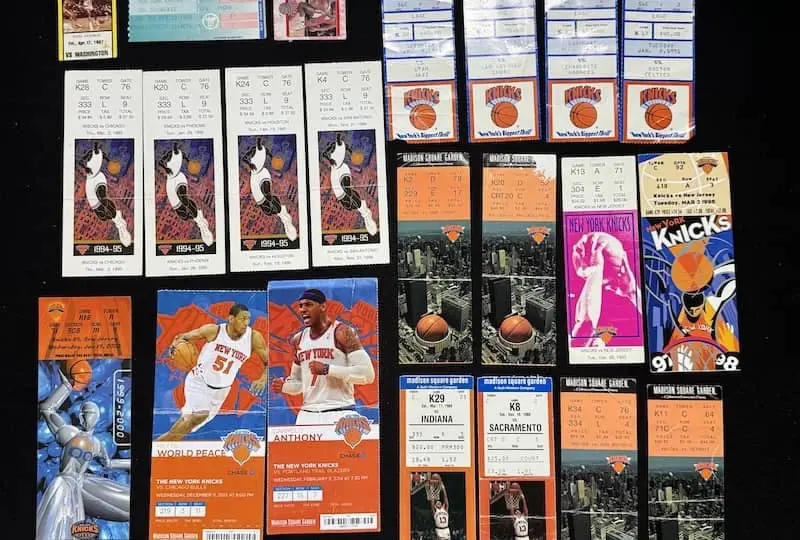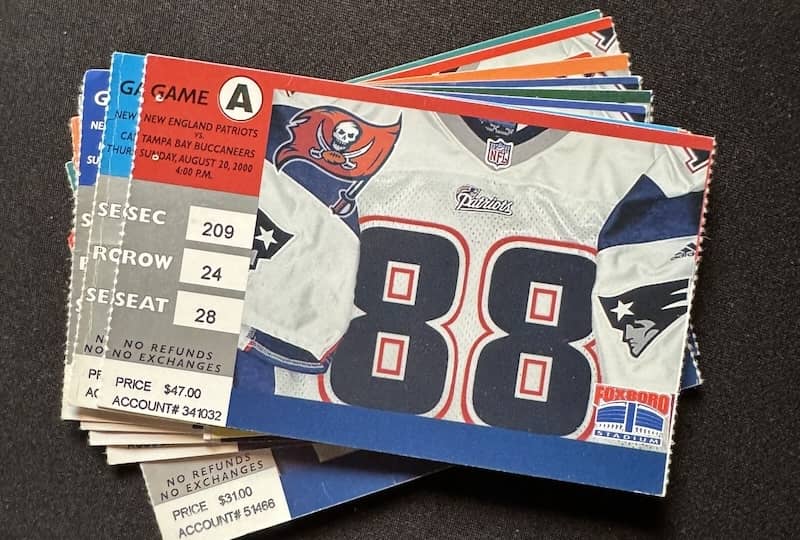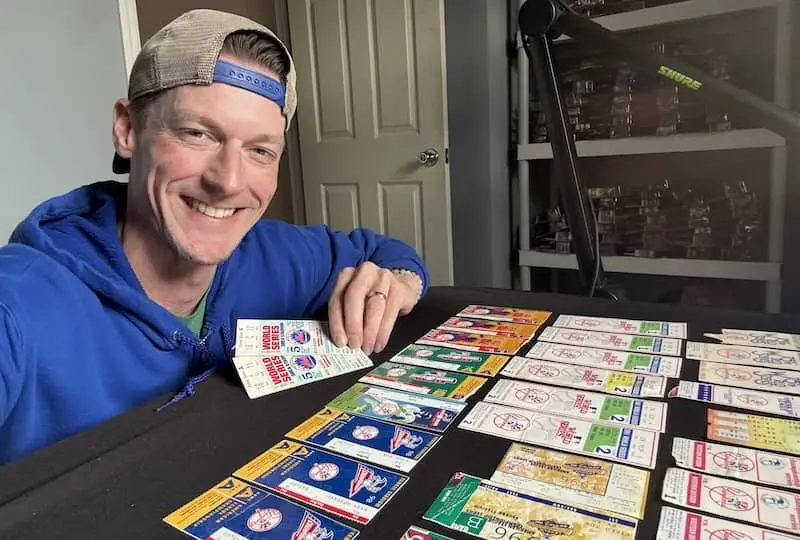
Many new ticket stub collectors may assume that rarity determines an item’s value. Fewer surviving copies should mean more money, just as it does with rare coins or first-edition books.
However, this hobby is a little different. A ticket can be one of the only surviving copies from an entire season and still be worth almost nothing. At the same time, a stub from a night nobody thought twice about can sell for hundreds of dollars. What makes a ticket stub valuable almost always comes down to one thing: what happened at that specific game or show, and how many people want a piece of it.
When looking at your own stubs, keep in mind that a collection full of ordinary-looking regular-season ticket stubs is not automatically worthless just because none of them looks rare or important on the surface.
Rarity Does Not Automatically Create Value
Picture a rained-out minor league game from the 1960s, half-empty stands, a few hundred tickets printed, and maybe a handful that survived the decades since. By the numbers, that stub could be one of the rarest pieces of paper in the entire hobby. It could also be worth close to nothing. Nobody remembers that game. Nothing particularly special happened that night.
A rare object nobody wants still has no market. Rarity sets a ceiling on how many copies exist. It doesn’t explain why anyone would want one in the first place.
That is not just a hypothetical. Most of what comes through our door works the same way: the overwhelming majority of what people bring us predates 2000. Yet, only a small slice of that connects to something specific enough to drive real demand. That doesn’t mean the rest isn’t worth a look. We’d still love to see what you’ve got.
The Story Helps Create Demand
Many collectors don’t just want an old piece of paper because they typically want to own a piece of something specific, like a record or a milestone. They often want to hold a moment that mattered enough to talk about for decades.
An unused ticket to Michael Jordan’s first NBA game has sold for roughly half a million dollars. It was never even torn at the gate, which usually works against a ticket’s value. None of that changes the outcome. The demand traces back to whose career started that night.
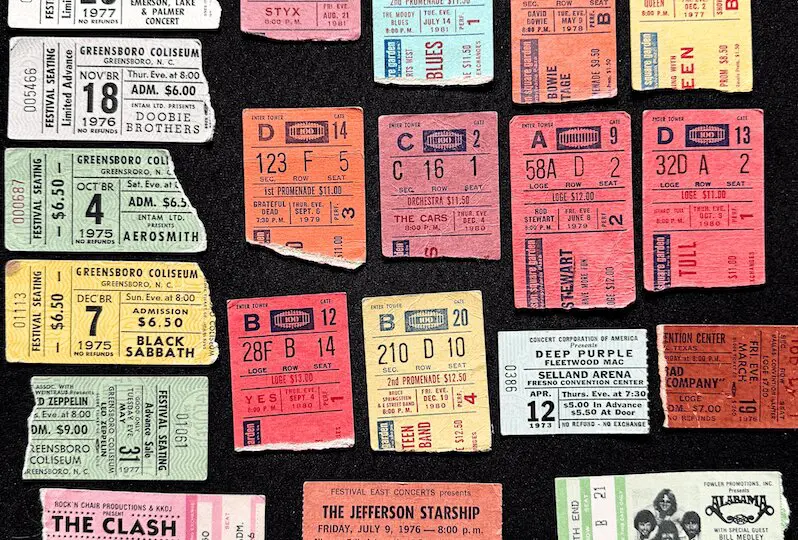
The same logic usually applies on a smaller scale to concerts. A recording session, a one-off reunion show, or a set that later became famous for reasons nobody could have predicted at the time all create the same effect: people want in, and a ticket can feel like the closest thing to actually being there.
But Rarity Still Plays a Role
Even though rarity is not the most important factor, story and scarcity still work together. A famous night that 80,000 people attended, where almost everyone kept a ticket, spreads that same demand across a huge supply, which caps how much any single stub is worth.
A famous night that a few hundred or a few thousand people attended, where almost nobody thought to save the ticket, concentrates that same demand onto a tiny handful of surviving stubs. That’s closer to the pattern behind most of the higher-value stubs in this hobby: a real story, combined with a supply small enough that owning one can feel wondrous and exciting.
Two Collectors Can Value the Same Stub Differently
Even if you don’t own a rare or particularly exciting collection, there may still be demand for what you have. A team-focused collector wants anything connected to a specific franchise, stretching back as far as records exist, regardless of what actually happened at that specific game. A moment-focused collector only wants the one game where something happened, and has little int
Both kinds of demand exist simultaneously, often for entirely different reasons. A stub from a franchise’s very first home game can matter to one collector purely because of the date on the ticket. A routine midseason game from that same year could matter more to someone else because of who happened to be on the field that day.
The Kind of Story That Moves the Needle
Even though not every notable event drives strong demand and not every quiet one falls short, here are a few common patterns to keep an eye out for:
- A record or milestone set that night
- A performance at a concert that was recorded and later had a record release
- The debut of an unknown singer who later became famous
- A season opener for a brand new team
- A game tied to a unique moment that people still talk about
None of that shows up on the ticket itself. That’s exactly why it’s worth having someone check, not just guess.
Find Out if Your Stub Has That Story
Most people can’t look at a stub and know whether it connects to something historically or culturally significant. It usually takes cross-referencing the date, the team or artist, and the venue against decades of recorded history to know for sure.
At Dave Buys Ticket Stubs, we run every submission through that kind of check. We typically send back a no-obligation cash offer in as little as 10 minutes, with no cost or commitment to sell. All we need from you are some clear pictures of your collection to get started. Submit your photos today. We look forward to working with you.