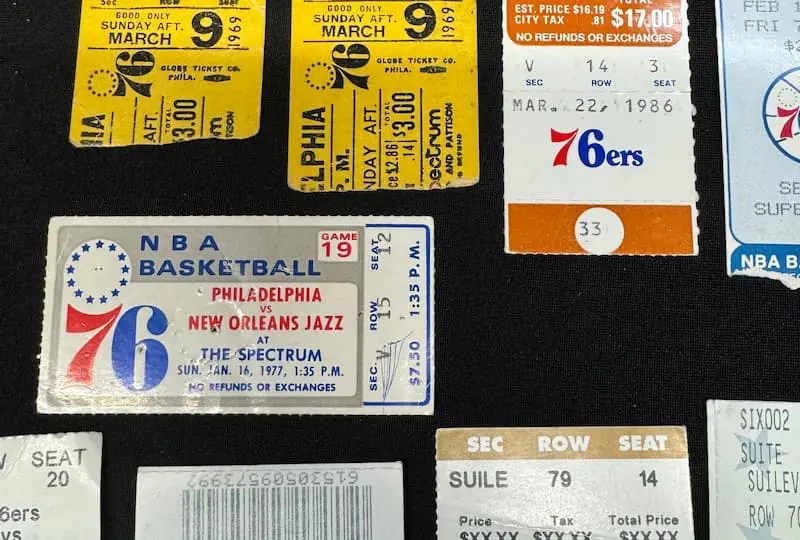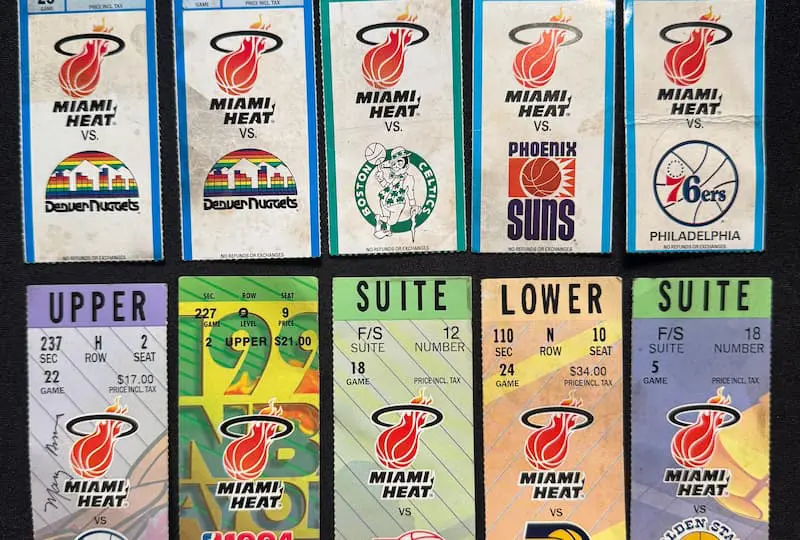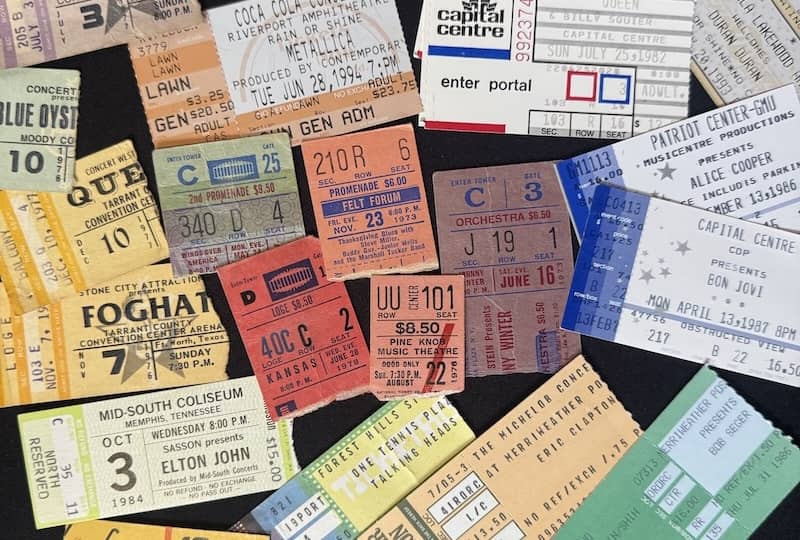
A move, a remodel, or the slow work of downsizing usually starts the same way: a stack of boxes nobody has opened in years. Somewhere in that stack is often an old scrapbook or shoebox of ticket stubs, tucked away and mostly forgotten.
Because old ticket stubs in the attic may not look as valuable as other collectibles, they often end up in a donation pile or the dumpster before anyone thinks to ask whether they are worth anything.
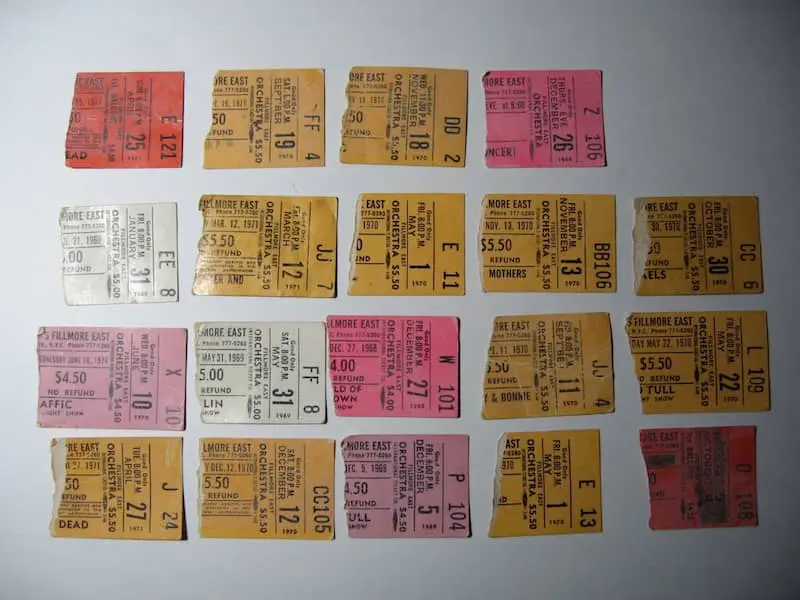
Why Ticket Stubs Are Difficult To Collect
Comic books, sports cards, and Pokémon cards all have something old ticket stubs usually don’t, and that’s a retail market. A collector can walk into a brick-and-mortar shop or a card show and buy inventory on the spot. That’s not really a possibility with a 1974 Yankees game ticket stub.
Much of the supply of old ticket stubs sits in the same types of places: basements, attics, and closets. A stub that exists today is one that somebody personally kept, either because it meant something to them, or because it was one more marker of a place they’d gone. A stub that gets thrown out is gone for good. That happens more often than it should, usually because nobody realizes collectors are looking for it. A stack of stubs looks like paper clutter to the person clearing it out. It rarely looks that way to a collector.
Why Valuable Stubs Get Thrown Out
When downsizing, boxes get sorted fast, usually under a deadline. Anything that looks like scrap paper often gets tossed without a second look. Real estate closings and moving trucks don’t wait. A scrapbook of tickets may look like something that isn’t worth keeping, even to the person who originally collected them.
Not to mention, a torn and faded stub reads as trash to someone moving quickly. However, none of that lowers its value. Even handwriting can add to it since collectors sometimes enjoy knowing that someone treasured the stub while it was in their possession.
Sometimes the decision isn’t even the collector’s to make. The person who originally saved the stub might remember exactly why it mattered. However, the person clearing out the house doesn’t, because the story never got passed down with the paper. A grandchild sorting through a late grandparent’s closet is looking at an object without the memory attached to it, and they may not have the time or motivation to figure out what they are actually looking at.
How To Sort Through the Stubs
A box or scrapbook of ticket stubs typically holds a mix of everything: sports and concerts, different decades, different teams. Before doing any research, a quick sort makes the process much easier:
- Split sports from concerts first. Group the two apart, then work through each separately. Because modern tickets are usually bought online, it’s rarer to find anything dated after 2000, so most of what turns up will predate it.
- Don’t sort by assumed importance. A regular-season ticket stub from a game attended with a grandfather can look like the least likely one to matter. There’s no way to know from the ticket alone whether that particular game was part of something bigger. The same goes for concerts. A stub from driving two hours to see Van Halen in 1985 could be sitting in the same box as everything else, unlabeled and easy to pass over.
- Don’t sort out damaged stubs. Condition varies widely, and that is usually a good sign rather than a bad one. Stubs from Cleveland’s 10-cent beer night in 1974, a promotion that got so out of hand that fans stormed the field and the game had to be forfeited, tend to show up stained, creased, or warped, exactly the way collectors want them, since the damage is proof the ticket was there for something memorable.
It’s Fine To Keep the Ones That Matter
Even if it’s worth some money, not every stub needs to be sold. A ticket from a first date, a father-son trip to a World Series, or the night before someone shipped off to basic training carries a kind of value no buyer can put a number on. Those are worth keeping, full stop.
The ones worth a second look are usually the other kind: the regular-season games from decades ago, the concerts nobody quite remembers the story behind, the duplicates, the ones stuck in a box because nobody wanted to be the one who threw them out. Sorting tickets into the categories “these matter to me” and “everything else” can make the rest of the process much easier.
How To Find Out What a Ticket Is Worth Before Tossing It
Most people don’t have the time to become a historian overnight or even to sort the tickets themselves, so find a buyer who will do most of that for you. Some hesitation is normal if you’ve never sold anything to a stranger online. Look for a reputable buyer who makes the process as smooth and convenient as possible (check for lots of positive reviews).
Take a moment to pull any ticket stubs from a scrapbook or envelope before they go to a donation bin or a dumpster. After that, take a photo.
Is the stub glued to a scrapbook page? No problem; just take a photo of the visible side of the ticket. A scrapbook of old ticket stubs does not need to be sorted, researched, or cleaned up to be worth a second look.
The right buyer will check every submission against decades of sports and music history, and send back a no-obligation cash offer. A few photos are all it takes, even from a box that has been sitting untouched for years.
Video

Infographic